


Top

kyo-tsukemono.com kyo-tsukemono.com

MENU
Senmaizuke
Senmaizuke
  1. HOME
  2. Three Major Tsukemono of Kyoto
  3. Senmaizuke

Three Major Tsukemono of Kyoto

Senmaizuke

Senmaizuke

Effort to bring out the true value of something without smothering it with technique.
Senmaizuke

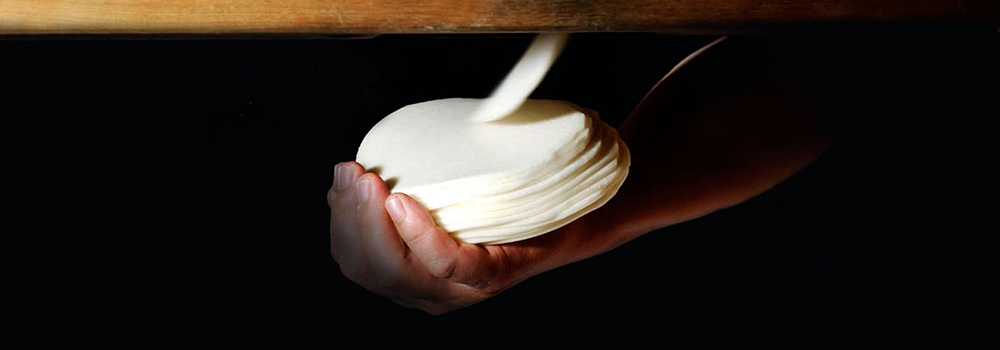
There is a word in the Kyoto dialect called Hannari. It is the perfect way to describe Senmaizuke and its surprising softness. The origin of Senmaizuke dates from more than a century ago when Tosaburo Ofuji, of the Bureau of Imperial Cuisine, was searching for a flavor that would please the tastes of Emperor Komei.
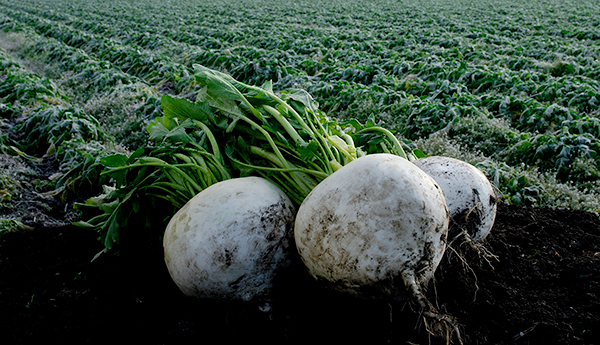
One day, Ofuji was inspired by pickled turnips that were being sold by a Tsukemono shop on the Nawate Sanjo Sagaru street as Obanagawazuke pickles. He refined the fermentation methods, seasoning, and flavor leveraging his experience cooking for the Imperial Court, and searched far and wide for the ideal turnip, finally discovering it at Shogo-in no Sato.
Later, after leaving his position at the Court, he opened a shop called Ofuji and began selling the pickles, which became the origin of Senmaizuke. The demand for the delicious taste exploded when it earned a ranking among the top products of Japan at the National Industrial Exhibition held in Kyoto in 1895. As a result, Senmaizuke has remained a staple of Kyoto cuisine to this day. Unlike other Tsukemono pickles, Senmaizuke is pickled through a delicate process that is not intended for long-term storage. It’s fresh, subtle flavor was even praised by warriors from the late Edo period to Meiji Restoration as the “Capital Killer”.
Harvesting
The harvest of the turnip fields begins just as the leaves of the maple trees start to turn red. The cold air increases the firmness of the turnips and brings out the flavor, resulting in well-shaped turnips.
Washing
The turnips are gently and painstakingly washed in water.
Peeling
The Shogoin turnips are then carefully peeled. After peeling, they are washed again and prepared for slicing.
Slicing
This is where the craftsmen show off their skill. The turnips are sliced using a special slicer specifically designed for Senmaizuke.
Preparation (Nobashi)
The sliced turnips are lightly salted to start the initial pickling process. Between 80 and 90 turnips, or about 2,000 slices, are placed in a Shitodaru barrel of roughly 72 liters. The slices are weighted down using a weight between 65 and 75 kilograms. Inside the barrel, the Senmaizuke wait patiently to mature.
Initial pickling
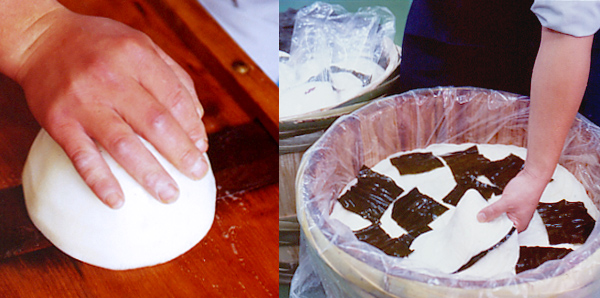
The pickles are arrayed on the hand and figures like playing cards.
Main pickling
The main pickling process is begun after initial pickling is complete. Ingredients such as first-quality kelp from Hokkaido, rice vinegar, and mirin from the sake-producing region of Fushimi, are added to slowly breath life into the Senmaizuke until the end.
Completion
The flavorful Senmaizuke are complete.